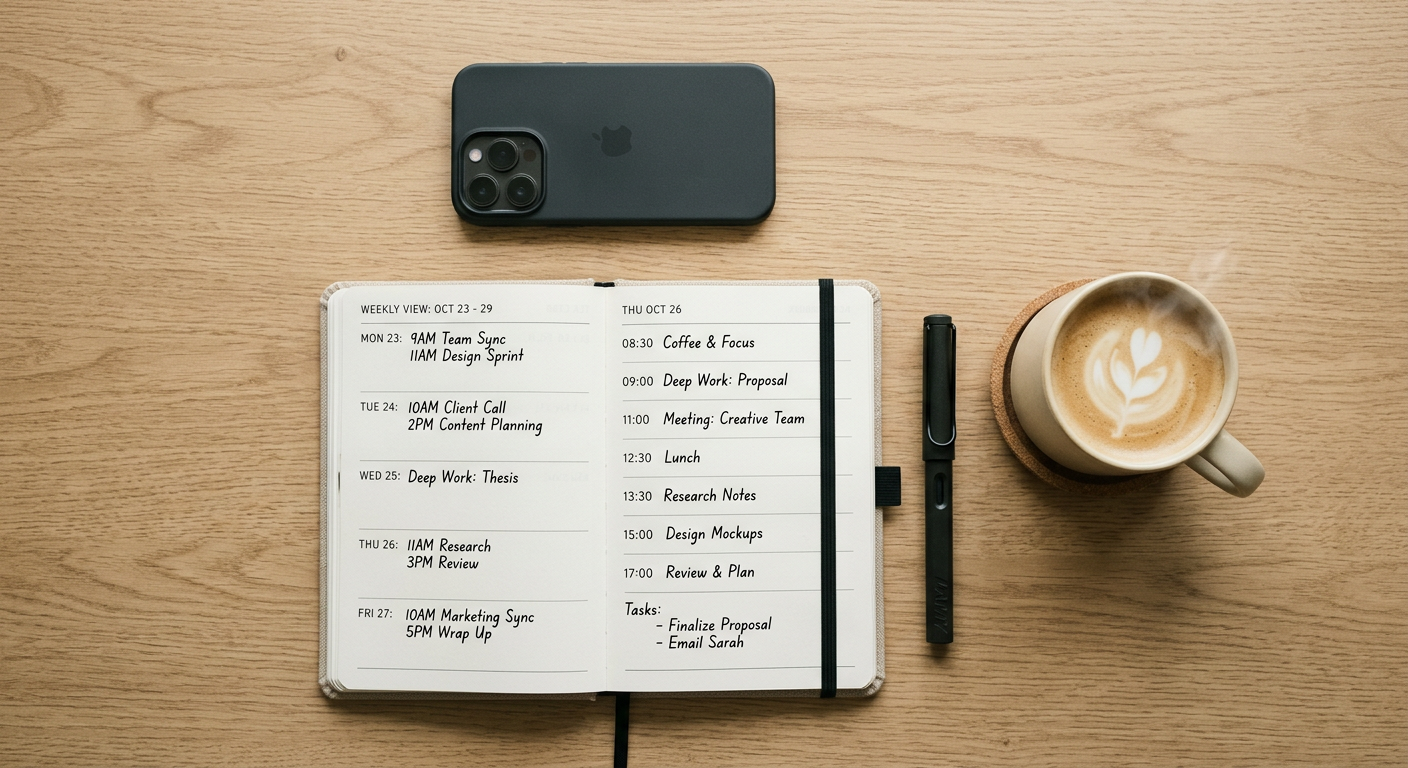
Working from home promised flexibility. What it quietly delivered was a 24-hour distraction machine located inside your own bedroom.
The notifications, the open tabs, the unread messages, the blurring of work and non-work: none of it is accidental. Every app on your phone is engineered to compete for your attention. The question is not whether they are winning. The question is whether you have decided to fight back.
The real cost of distraction
Distraction is not just annoying. It is expensive.
Research from the University of California, Irvine found that it takes an average of 23 minutes to fully recover focus after an interruption. Multiply that by the number of times you check your phone, respond to a Slack message, or open a new tab mid-sentence, and you will find that most workdays contain very little actual work.
The home environment makes this worse. There is no social pressure to look busy. There is no commute to signal the start of the day. The boundary between "on" and "off" is invisible, and so the brain never fully commits to either.
Turn off almost every notification
The most effective thing you can do today costs nothing and takes three minutes.
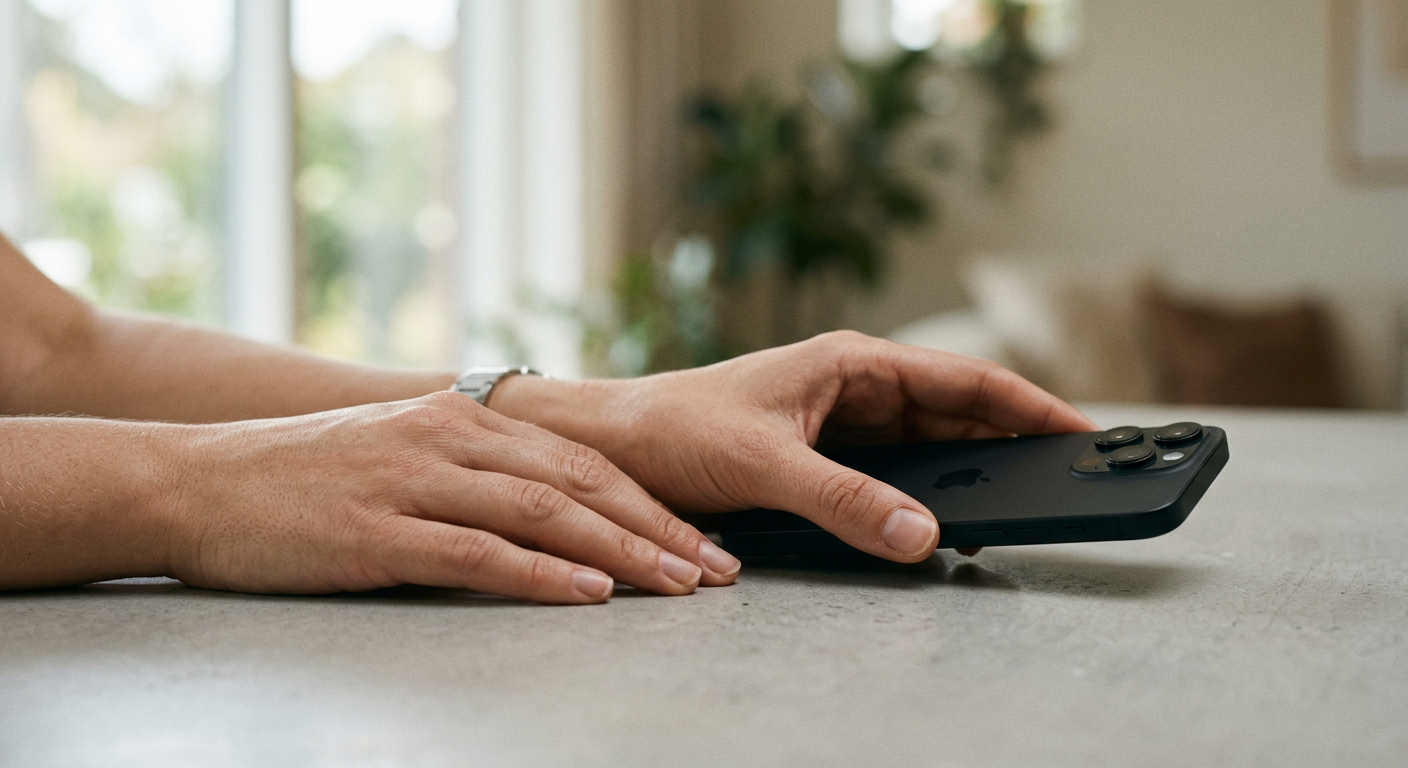
Go into your phone settings. Turn off every notification except calls and messages from people you actually know. Do the same on your laptop. Email, Slack, social media, news apps: none of them need to interrupt you in real time. They never did.
Notifications create a psychological loop: they arrive, you check, you lose the thread, you start over. Breaking that loop at the source is more effective than any focus technique that tries to compensate for it.
Design your digital environment like your physical one
You would not put a television in the middle of your desk. But most people have the equivalent: a browser with twelve open tabs, a social media feed one click away, and an email client refreshing every thirty seconds.
Clean it up deliberately:
- Use one browser profile for work. Keep personal browsing separate.
- Close every tab that is not directly related to the task at hand.
- Remove social media apps from your phone's home screen, not deleted, just not visible.
- Use a tool like Freedom or Cold Turkey to schedule hard blocks during deep work hours.
The principle is simple: if something requires effort to access, you will reach for it less.
Protect your morning before anything else
The first hour of the day sets the cognitive tone for everything that follows.
Most people begin by checking email or scrolling through news, which immediately puts them in reactive mode, responding to other people's priorities instead of working on their own. That pattern rarely reverses itself before lunch.
A stronger approach:
- Do not touch your phone for the first 30 minutes after waking.
- Begin work with your single most important task for the day.
- Check email and messages only after that task has a meaningful start.
This is not a productivity trick. It is a decision about whose agenda runs your day.
Use time blocks, not to-do lists
A to-do list tells you what to do. A time block tells you when to do it.
The difference matters because tasks without assigned time tend to accumulate rather than get done. If "write report" sits on a list all day, it will still be there tomorrow. If it lives in your calendar from 9 to 11 AM, it has a moment, and the rest of the day stops competing with it.
Tools like Reclaim or Google Calendar with manual time blocking can enforce this structure automatically. The goal is a day that is already decided before it begins, which removes hundreds of small decisions and the friction they create.
Separate devices from rest spaces
The brain is associative. Where you work, what you use, and how you sit all become cues that either prime focus or prime relaxation.
If you work from your sofa, your sofa becomes a place of obligation. If you answer emails in bed, your bed becomes a workspace. These associations accumulate and eventually make it harder to focus at your desk and harder to rest anywhere else.
The fix is spatial:
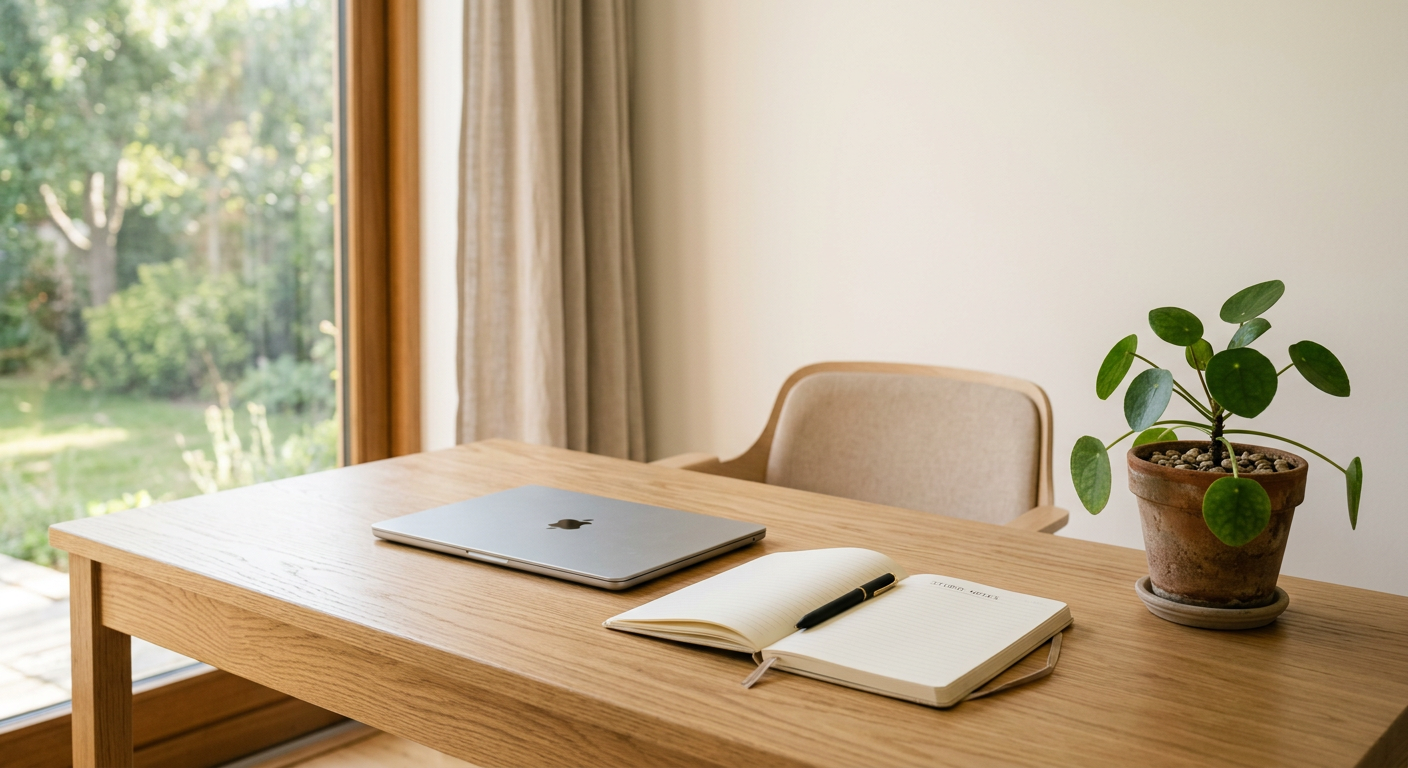
- Designate one physical spot as the only place where focused work happens.
- Never use that spot for scrolling, watching, or lounging.
- When you leave that spot, you are off.
It does not require a home office. A corner of a table, a specific chair, a consistent setup: the ritual matters more than the square footage.
Manage the audio environment
Sound is one of the most underrated distraction variables.
Background noise, TV, street noise, household conversations, consumes cognitive bandwidth even when you are not consciously listening. The brain continues to monitor it, which means part of your attention is always elsewhere.
Options that work:
- Noise-canceling headphones create a physical signal to others that you are unavailable.
- Brown or white noise masks unpredictable environmental sound.
- Instrumental music without lyrics keeps the environment acoustically stable.
- Silence, if you can get it, remains the most powerful option for deep cognitive work.
What does not work: music with lyrics during tasks that require reading, writing, or complex thinking. The language centers compete.
Build a shutdown ritual
One of the hidden causes of distraction during the day is an unresolved relationship with the end of it.
If you never clearly stop working, part of your brain stays on alert all day, monitoring for things that might still need doing. That low-level vigilance consumes focus and makes it harder to fully commit to any single task.
A simple shutdown ritual fixes this:
- Review what you completed.
- Write tomorrow's top three priorities.
- Close all work apps and browser tabs.
- Say "shutdown complete," aloud if needed.
This sounds small. The effect is not. It tells your brain that the day is actually over, which makes it easier to be fully present the next time it begins.
Final thought
Distraction is not a character flaw. It is a default setting, and like any default, it can be changed.